
Nuclia AI Capabilities
Nuclia prepares your unstructured data for AI and provides a diverse set of AI capabilities right out of the box. This allows you to concentrate on crafting your own AI product and delivering value, rather than investing time in developing capabilities
-> RAG-as-a-Service (Retrieval Augmeneted Generation as a Service)
-> AI Search and Generative Answers for unstrucutred data
-> AI auto classification
-> AI Summarization for your files
-> Multiple LLMs in just a click
-> Personalised user prompts definition
-> Named Entity detection & Knowledge Graph
-> AI Search Copilot
-> Generated Q&A
-> Synthetic questions generation
-> Continuous training and model adapters
-> Prompt Lab for LLM validation
-> AI Agents
RAG (Retrieval Augmented Generation) is a technique that combines retrieving and generative assignments in natural language processing tasks.
RAG is commonly used in question-answering and knowledge systems. The retrieval component quickly finds relevant sources containing potential answers from a knowledge base, and the generation component refines and generates a cohesive response.
Nuclia automatically indexes your data and uses RAG to provide the best answers and results.


Nuclia always shows the specific parts of data used to generate an answer. If the organization does not have an answer to a specific query, Nuclia does not answer.
Learn more about AI search ->
With Nuclia, you can train your own AI Classification models and apply them to full resources (ex. documents) or specific paragraphs from your data.

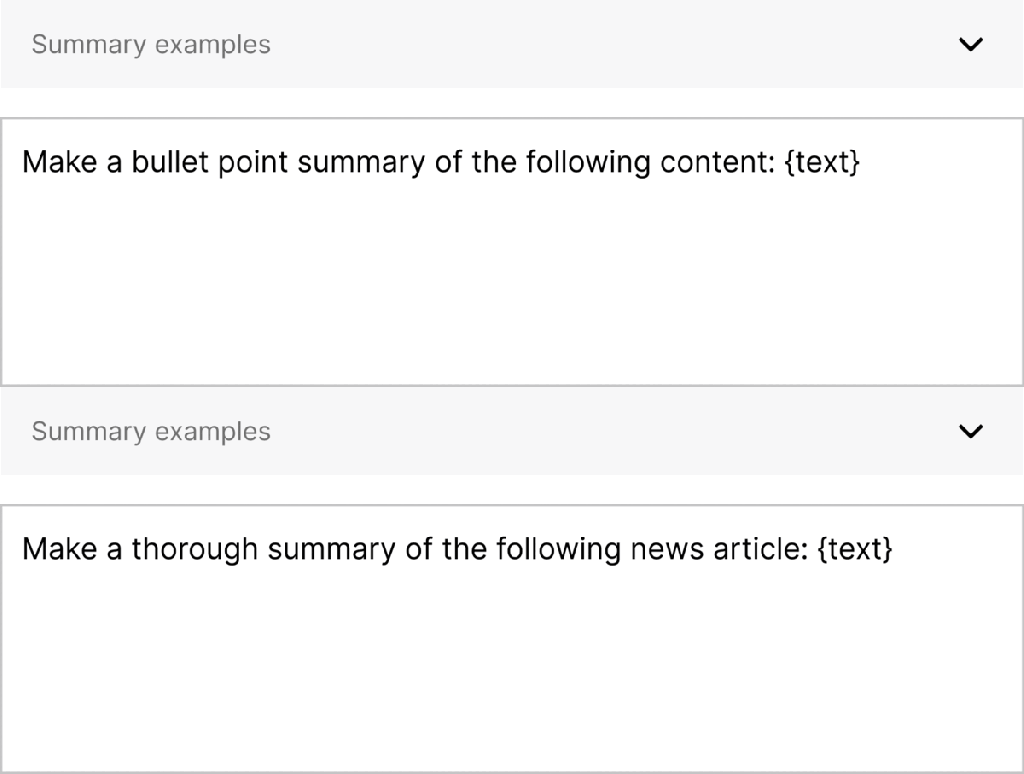
For deeper and more industry-centric summaries, with Nuclia you can customize the sections, length, and look of a summary.
Nuclia integrates with ChatGPT 3.5, ChatGPT 4, Gemini, Anthropic 2.1 and 3, Mistral Large and Mixtral, Gemma and Nuclia Everest, Nuclia’s own 100% private and secure LLM.
Seamlessly change one LLM to another with just a click.

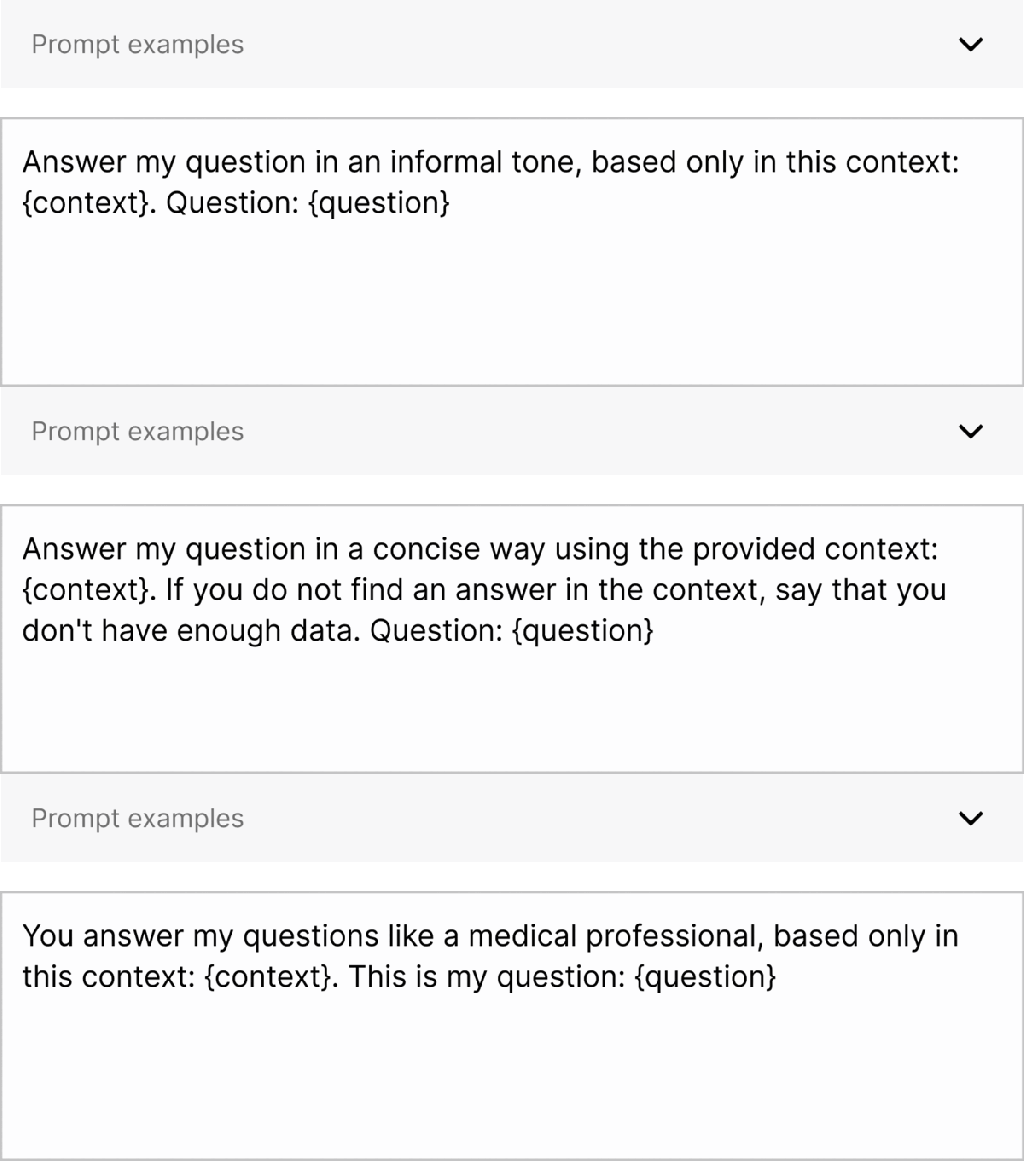
Use our default prompt examples or create yours and see them applied immediately.
Named Entity Recognition
Nuclia detects out-of-the-box 16 types of Named Entities and automatically indexes them generating a Knowledge Graph from your data.

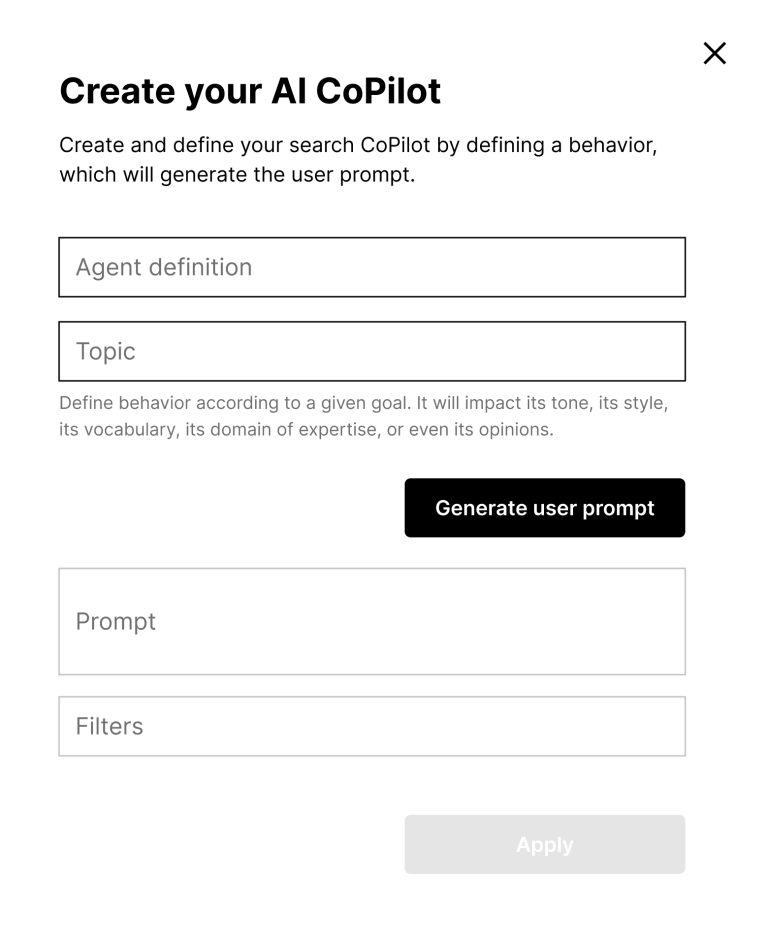
AI Search Copilot
This translates into a productivity boost and, at the same time, could raise satisfaction rates and give all sides an overall better experience in communication.
Nuclia allows organizations to use their already-existing information in the form of Q&As to automatically answer questions already solved. Thanks to the understanding of the real meaning of the user’s query, Nuclia can provide the right answers even if the question is formulated differently.
The process keeps running continuously and translates into better answers, understanding, and training of customers’ specific knowledge domains.
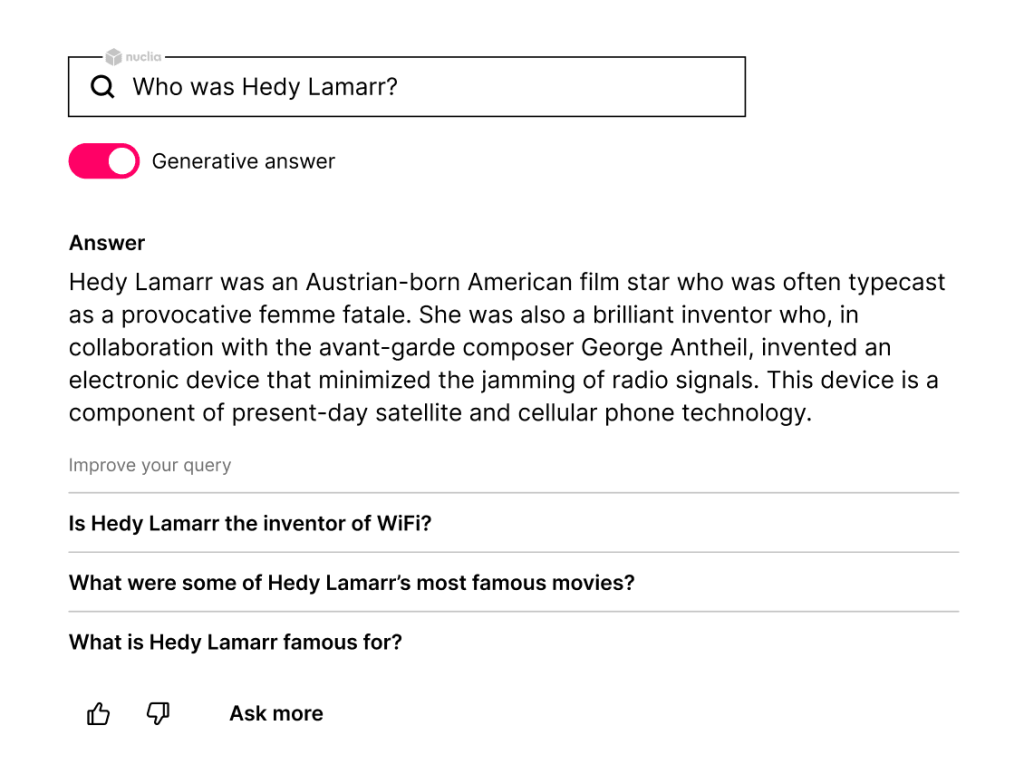
This means that, given a specific document, Nuclia automatically generates every possible question and answer that can be asked and answered from the content.
This capability is very useful to guide users to ask the right questions. Some popular search engines name this functionality “Did you mean?” or “User also ask for …” when answering users’ queries.
Prompt Lab for LLM validation
The Nuclia Prompt Lab allows you to test how the different LLMs behave and answer questions with your own prompts and your own data.
Save hours of experiments, align the LLM with your company, and increase your product value.
> Learn more about the Prompt Lab